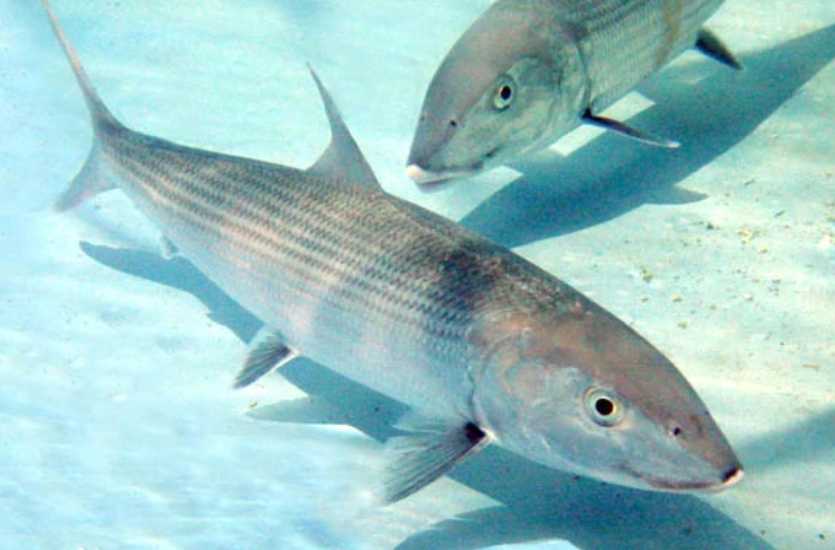
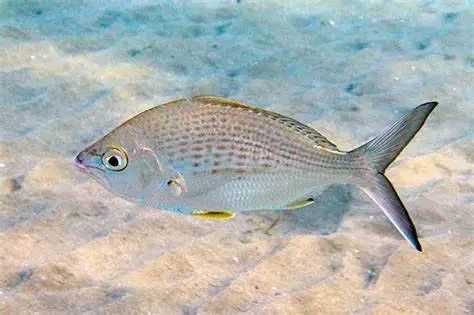
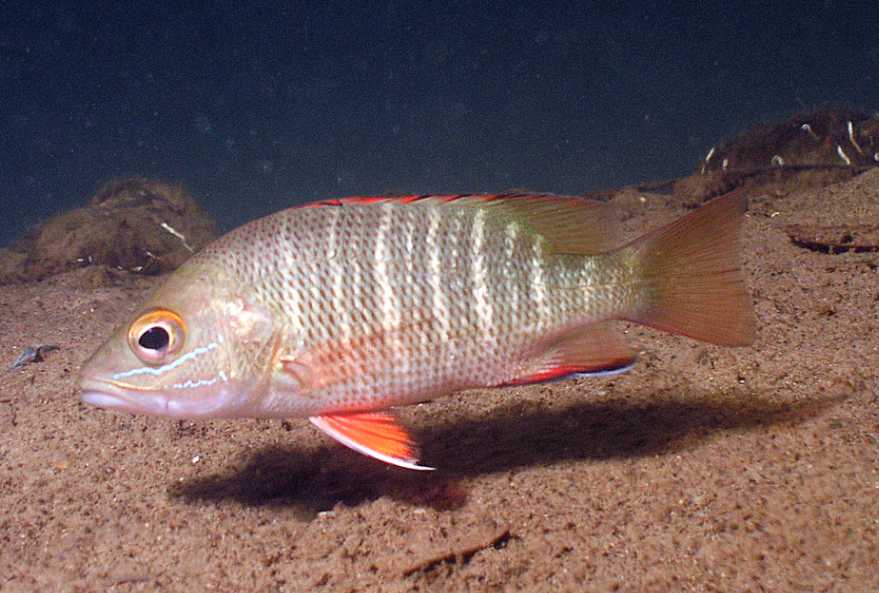
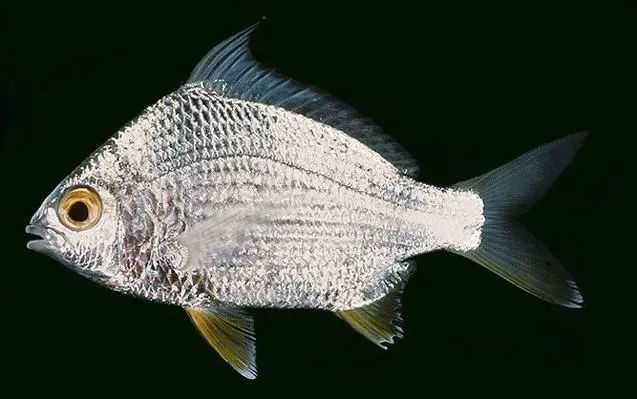
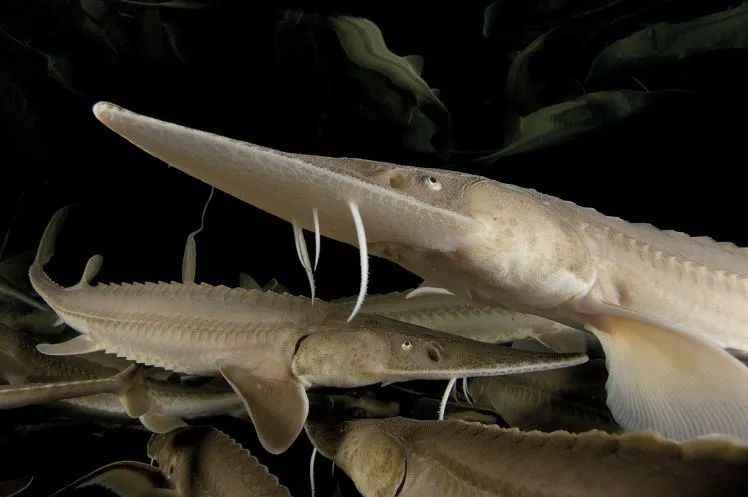
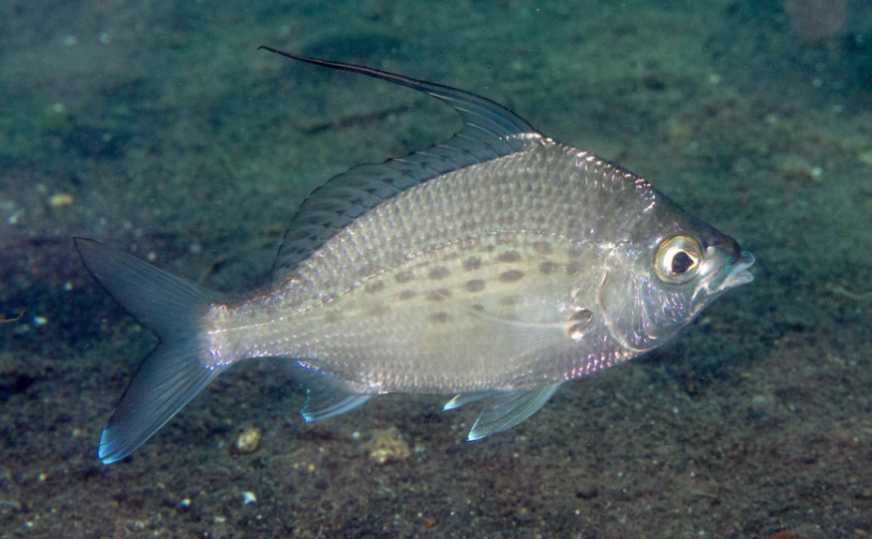
The roundjaw bonefish showcases an elongated, streamlined body that can grow up to 100 centimeters in length. Its body is covered in small, silvery scales that shimmer under the sunlight, providing effective camouflage in the shallow, sandy waters it calls home. Its most prominent feature is the long, pointed snout and the aforementioned rounded jaw, which are perfectly adapted for sifting through the sand in search of prey. The dorsal fin, positioned towards the rear of the body, and the forked tail fin enable the fish to swim with remarkable speed and agility, darting through the water to escape predators or pursue food.
In its natural habitat, the roundjaw bonefish is commonly found in shallow, inshore waters, including lagoons, estuaries, and the edges of coral reefs. It is a bottom - dwelling species, using its sensitive barbels to detect small invertebrates such as crustaceans, mollusks, and worms hidden within the sandy substrate. It is often seen in small schools, providing safety in numbers as they forage during the day. Despite its adaptability, the roundjaw bonefish faces threats from habitat degradation due to coastal development, pollution, and overfishing in some areas. Conservation efforts, such as the establishment of marine protected areas and sustainable fishing practices, are crucial to ensure the long - term survival of this unique and important species in the rich marine ecosystems of the Indo - Pacific.