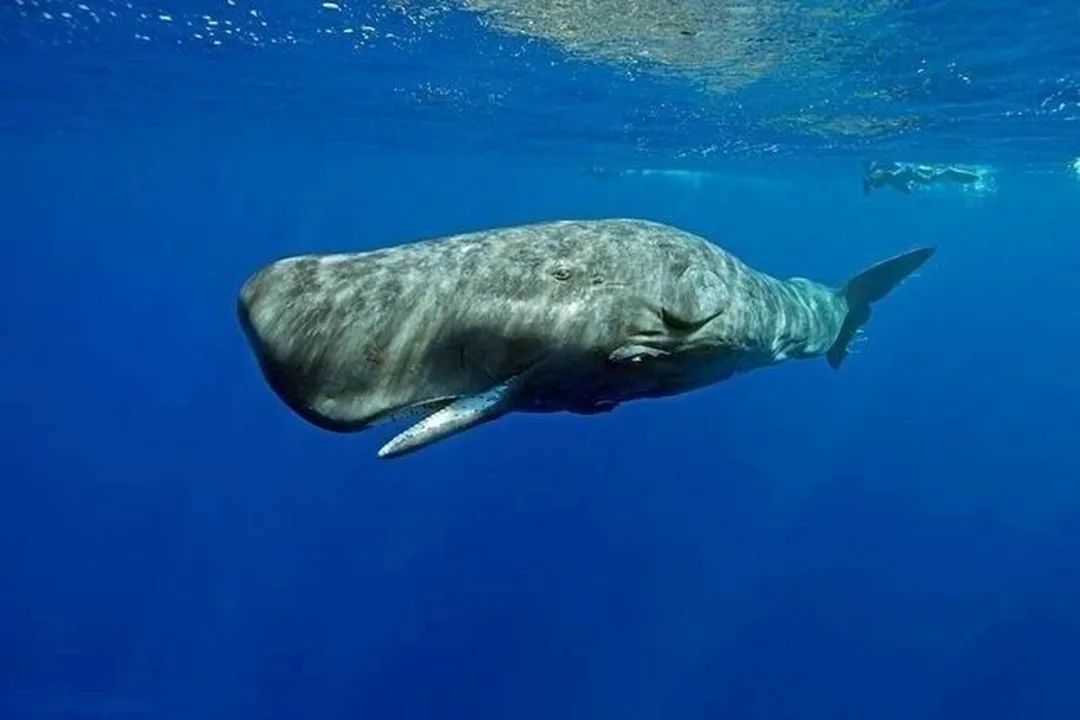
Sperm whales live in tight-knit pods, often comprising over 10 individuals, with a clear social hierarchy. Females and calves form the core of these groups, while males may venture solo or join bachelor pods as they mature. Their primary prey? The elusive giant squid, a legendary deep-sea creature that serves as both rival and sustenance. Using powerful echolocation clicks, sperm whales dive to extreme depths—over 2,000 meters—to pursue their prey, engaging in epic battles that echo through the ocean’s abysses. This predator-prey relationship has long inspired tales of sea monsters and maritime lore.
One of the most intriguing aspects of sperm whales is their unique sleeping behavior. When resting, they suspend themselves vertically in the water, heads pointed downward, resembling a cluster of underwater coffins. This motionless state, often maintained for minutes at a time, highlights their ability to conserve oxygen in the deep. While eerie in appearance, it underscores their adaptability to life in the pitch-black ocean depths. Despite their dominance, sperm whales face threats from commercial whaling, ocean pollution, and climate change. Their story is a reminder of the intricate balance between apex predators and their ecosystems, and the urgent need to protect these intelligent giants of the deep.