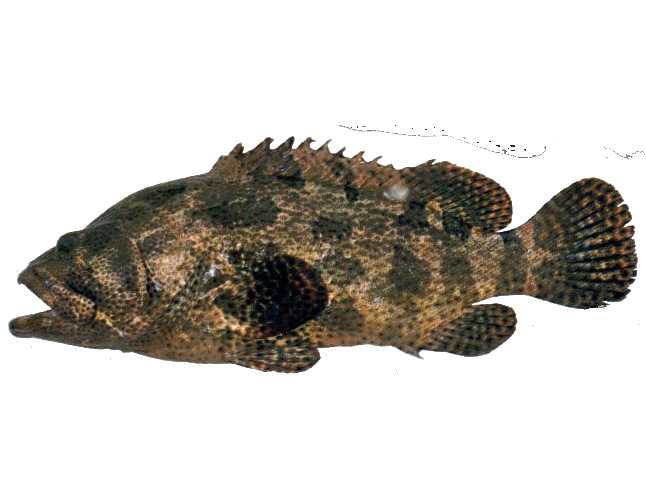
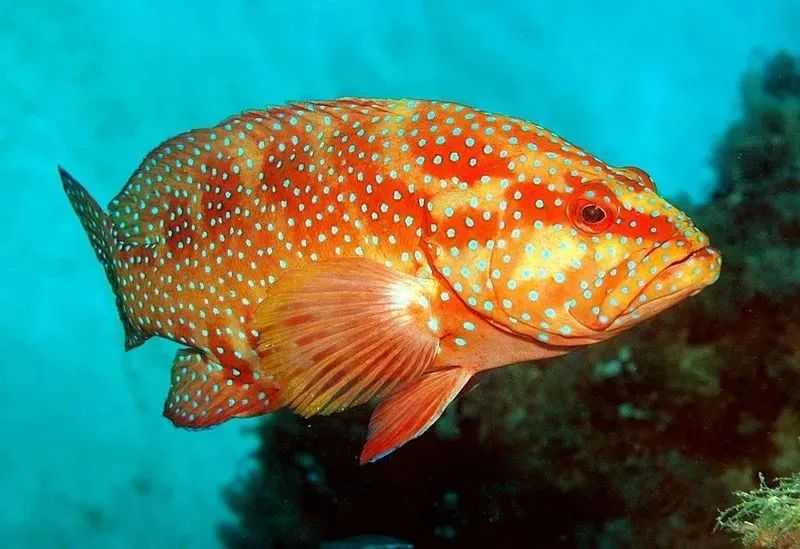
As a top predator in its habitat, the brown-spotted grouper plays a crucial role in maintaining marine biodiversity. Its diet consists of smaller fish, crustaceans, octopuses, and even juvenile sea turtles, making it a keystone species that regulates prey populations and sustains the health of coral reef ecosystems. Typically solitary, it employs ambush tactics, lurking in crevices or under ledges before striking with explosive speed to capture unsuspecting prey. During the day, it often rests in sheltered areas, becoming more active at dawn and dusk to hunt—a behavior that highlights its adaptability to both light and low-light conditions.
Despite its resilience, Epinephelus fuscoguttatus faces significant threats from overfishing, particularly for the live reef food fish trade, where its tender flesh and large size make it a prized catch. Habitat degradation from coastal development and coral bleaching further compound its challenges. Conservation initiatives, including marine protected areas, size limits, and captive breeding programs, aim to stabilize populations. As a species of concern on the IUCN Red List, the brown-spotted grouper serves as a barometer for reef health, reminding humanity of the urgent need to balance resource use with ecological preservation. Its story underscores the interconnectedness of marine life and the role of responsible stewardship in ensuring the survival of these magnificent underwater giants.